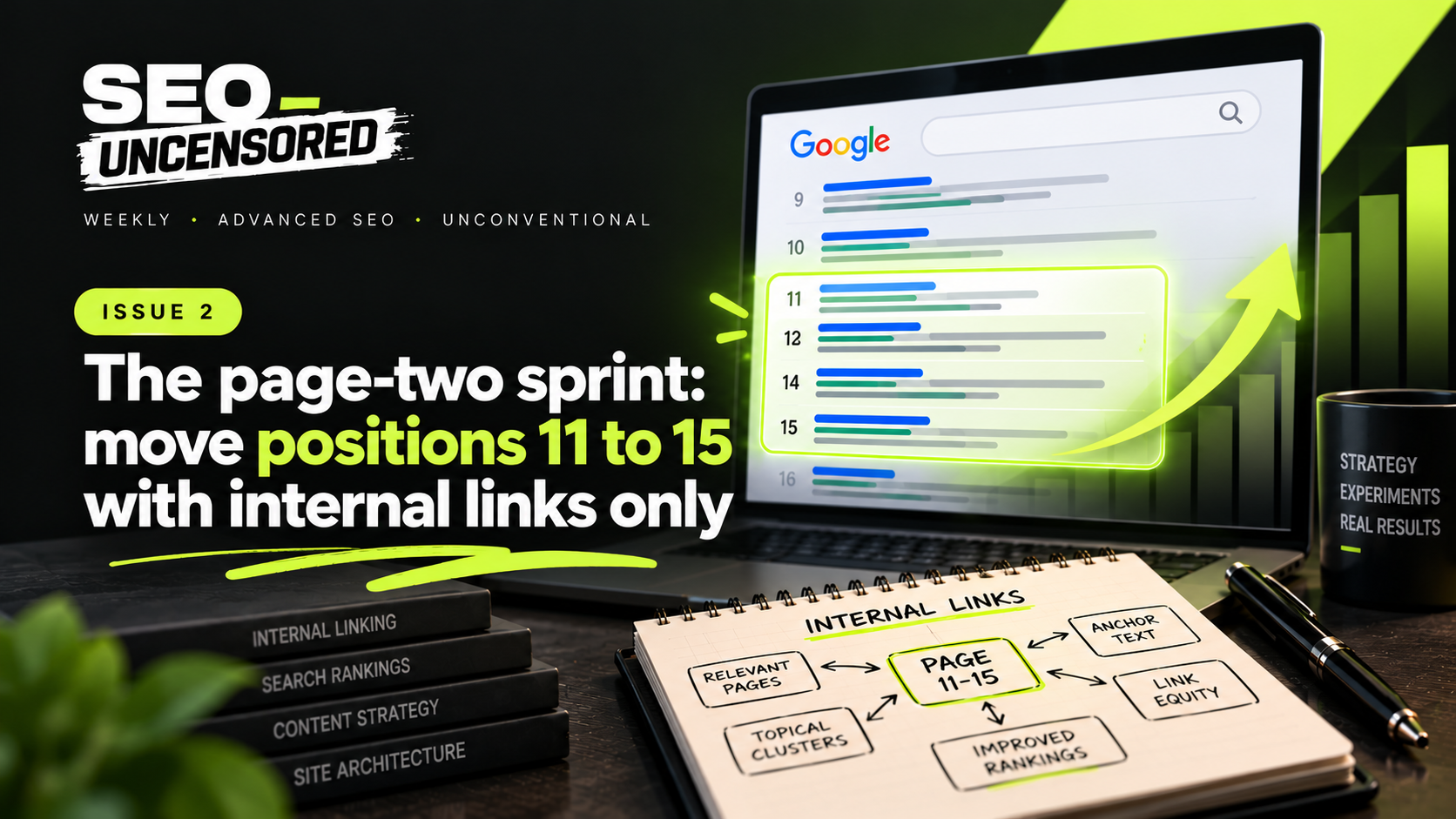
The tactic is simple: find URLs ranking between positions 11 and 15, identify relevant pages on your site that can link to them, and add contextual links where they genuinely help readers.
Run the sprint for two weeks, track the results for another two weeks, and use the data to decide whether internal linking was enough or the page needs a different intervention.
Test one variable before committing to a larger SEO project.
The idea: stop creating more authority and start redistributing it
Most internal linking exercises begin with a crawl, a list of orphan pages or a recommendation to add more links to important URLs.
This sprint starts somewhere more specific: pages that already rank close to page one but may not be receiving enough relevant internal links.
These pages have demonstrated some search visibility. They may already match the intent behind their target queries, but that does not mean internal links are the reason they sit on page two.
The opportunity is to find out whether better internal linking helps Google understand their importance and relationship to the rest of your site.
Instead of adding links everywhere, you will concentrate a small number of relevant links on a handful of high-potential pages.
Step 1: Find five pages worth rescuing
Open Google Search Console and go to Performance → Search results.
Set the date range to the last 28 days. Open the Pages tab and export the data.
Filter for URLs with an average position between 11 and 15 and at least 200 impressions.
These are your initial candidates, not your final shortlist.
For each URL, inspect the Queries tab and ask three questions:
- Is the page already receiving impressions for the keyword you want to improve?
- Does the page satisfy the search intent behind that keyword?
- Is the page a realistic commercial or strategic priority?
Reject pages that rank for irrelevant queries, target the wrong intent or have obvious content problems that internal links cannot solve.
Also check the individual queries, not just the page's average position. A page averaging position 13 might rank fifth for one query and 40th for another. The average alone can hide the opportunity.
Choose five candidates with clear target queries and a realistic chance of benefiting from stronger internal linking.
Build your shortlist
Use this simple scoring sheet to rank the candidates.